Sunday, 10 December 2017

The Attack on Pearl Harbor

Before the Attack on Pearl Harbor, relations between The U.S. and Japan were seemingly peaceful. The U.S. and Japan were in the process of negotiating an end to sanctions and establish peace.1891, Japanese immigrants began arriving in America as laborers. The majority of these immigrants settled in California. According to nationality, Asian children were forced to attend segregated schools. In 1924, Congress passed an immigration act that effectively stopped Japanese immigrants from entering the United States. The year 1941 was also the year President Roosevelt ordered the state departments to investigate the loyalty of Japanese Americans. November 7, 1941, The Munson Report was published. The Munson Report declared that there was no Japanese "problem" on the coast, and there was no suspicion of a Japanese uprising.

December 7, 1941, Japan forces attacked the United States military base located at Pearl Harbor, Hawaii. Japan's attack was unexpected by the armed forces of America and left the base relatively undefended. The Japanese strategy was an invasion by means of an air raid, consisting of kamikaze pilots. The infiltration took place at 7:55am to 9:45am lasting a total of 110 minutes. This single, brief attack cost the lives of 2,335 United States airmen and 68 civilians. 

Pearl Harbor, 1941: From a Sailor’s Perspective
Immediately following the Attack on Pearl Harbor, America began preparing for war. December 8, 1841, President Franklin D. Roosevelt met with Congress and addressed the repercussions Japan would meet. In FDR's session with Congress, he declared December 7, 1941 "A date which will live in infamy". In this meeting, The U.S. Congress would announce war on Japan. War on Japan, however, did not bring the nation together but instead divided it. On one side, there was a surge of American patriotism and nationalism. On the other side, people were concerned about another attack. February 19, 1942, Roosevelt signed Executive Order 9066. Executive Order 9066 authorized the exclusion of any civilian from any area from the right to a trial or hearing. The Act also permitted that all Japanese- Americans were to be evacuated from the West Coast. This affected approximately 120,000 people, many of which were legal American citizens. Executive Order 9066 was a clear violation of constitutional rights. 
Image result for america declares war on japan

Internment Camps created in the U.S. at the time of WWII are still surrounded by controversy. Internment is the action of putting a person in prison or some other kind of detention, particular during a time of war for the purpose of "national security". Recently President Trump spoke about the Internment Camps suggesting that detention was "harsh but necessary". However, according to Time, "most believe the implication of internment camps during WWII were justified and agree the government offered its good-faith defense of detention."
Image result for internment camps

Hatmaker, Alicia. "America Enters The War." Athens Drive High School. Lecture.
Hatmaker, Alicia. "Japanese Internment ." 30 Nov. 2017, Athens Drive High School. Lecture.
The Debate Over Japanese Internment Is Deeply Flawed. 21 Nov. 2016, time.com/
     4578616/japanese-internment-debate/.

Friday, 17 November 2017

Franklin Delano Roosevelt

"We have nothing to fear but fear itself." This quote represents the ambitions of Franklin Delano Roosevelt. At the young age of 39, Roosevelt contracted Polio that would cause him to be paralyzed from the waist down. He felt the pressure of living up to the image of presidents and was constantly out to prove himself as a strong leader whose physical incapabilities had no influence on his qualifications. Roosevelt's administration would go on to transform the Presidential model. His greatest achievements of his presidency included leading America through The Great Depression, appointing the first female cabinet member, creating The New Deal.

Franklin Delano Roosevelt came into office just as the country was suffering from The Great Depression. The Great Depression was caused by The Farm Crisis, easy access to credit, increase in the gap between poor and wealthy, and problems with the stock market. Effects of The Great Depression included homelessness, the creation of breadlines and soup kitchens, Shantytowns, Hoover flags, and a decline in immigration. Roosevelt was elected into office after winning The Election of 1933. His first official business was resolving the destruction created by The Great Depression. He began by introducing a bank holiday. March 6, 1933, all banks were closed and remained closed until passing an inspection. His second plan of action was The Emergency Banking Plan. Passed March 9, 1933, FDR proposed that all banks must be able to meet financial obligations of their customers before being allowed to reopen. His final steps to the reconstruction of The United States was to implement Fireside Chats. These weekly radio podcast focused on banking and would explain to the people what he was doing and why. 
FDR in 1933 (Photo: Elias Goldensky (1868-1943) [Public domain], via Wikimedia Commons)


Apart from leading the country out of The Great Depression, FDR also took strides in offering more political power to women. He appointed the first female cabinet member and supported the participation of his wife in The White House. Eleanor Roosevelt was a determined very active first lady. She had a strong political force and paved the way for future wives of presidents. Eleanor took bold stances for expanding civil rights and was often looked to for guidance by FDR.
Image result for first woman appointed to cabinet

Another lasting impact of Franklin Delano Roosevelt's presidency was The New Deal. The purpose of the New Deal was to provide relief, recovery, and reform. Relief meaning providing direct aid in the form of money, food, clothes, and shelter. Recovery meaning providing jobs and programs that put people back to work. Reform meaning changes in how the economy and government work to prevent future issues. Some of the acts passed through the creation of The New Deal are still implemented today including the Social Security Act, the Federal Housing Administration, and the Gold Reserve Act. The Social Security Act creates a personalized retirements plan and provides disability checks if you can no longer work. The Federal Housing Administration facilitates home financing, improves housing standards, and increases employment. The Gold Reserve Act works to transfer ownership of all monetary gold in the US Treasury and financial institutions from redeeming dollars from gold. 

Image result for the new deal

Franklin Roosevelt administration transformed the Presidential model. He was able to live up to the image of a great president and proved himself as a strong leader. His greatest achievements of his presidency included leading America through The Great Depression, appointing the first female cabinet member, creating The New Deal.

Hatmaker, Alicia. "The Cause of The Great Depression." Athens Drive High School,
     6 Nov. 2017. Lecture.
Hatmaker, Alicia. "FDR and The New Deal." Athens Drive High School, 11 Nov. 2017. Lecture.
"Franklin D. Roosevelt." Biography.com, www.biography.com/people/
     franklin-d-roosevelt-9463381.

Wednesday, 8 November 2017

The Roaring 20's


November of 1918 WWI has ended and the era kicks off with a celebration. The Roaring 20's was an era of major social and cultural change. The ideals of people were also changing and parties, dancing, music, and art emerged as a result. Improvements in technology and urbanization created a higher standard living for some Americans. The Roaring 20's was an era of jazz, prohibition, and racial tension.

Cab Calloway, Bessie Smith, Louis Armstrong, Duke Ellington were all revolutionaries during the 1920's. These men and women introduced the new style of popular music to the United States. This offbeat music consisting of improvisation, and unexpected beats was known as jazz. Jazz was born in New Orleans, Louisiana. Jazz during the 1920's revolutionized the culture of the United States. Jazz altered the past time of men and women, clothing style, and relations between races.
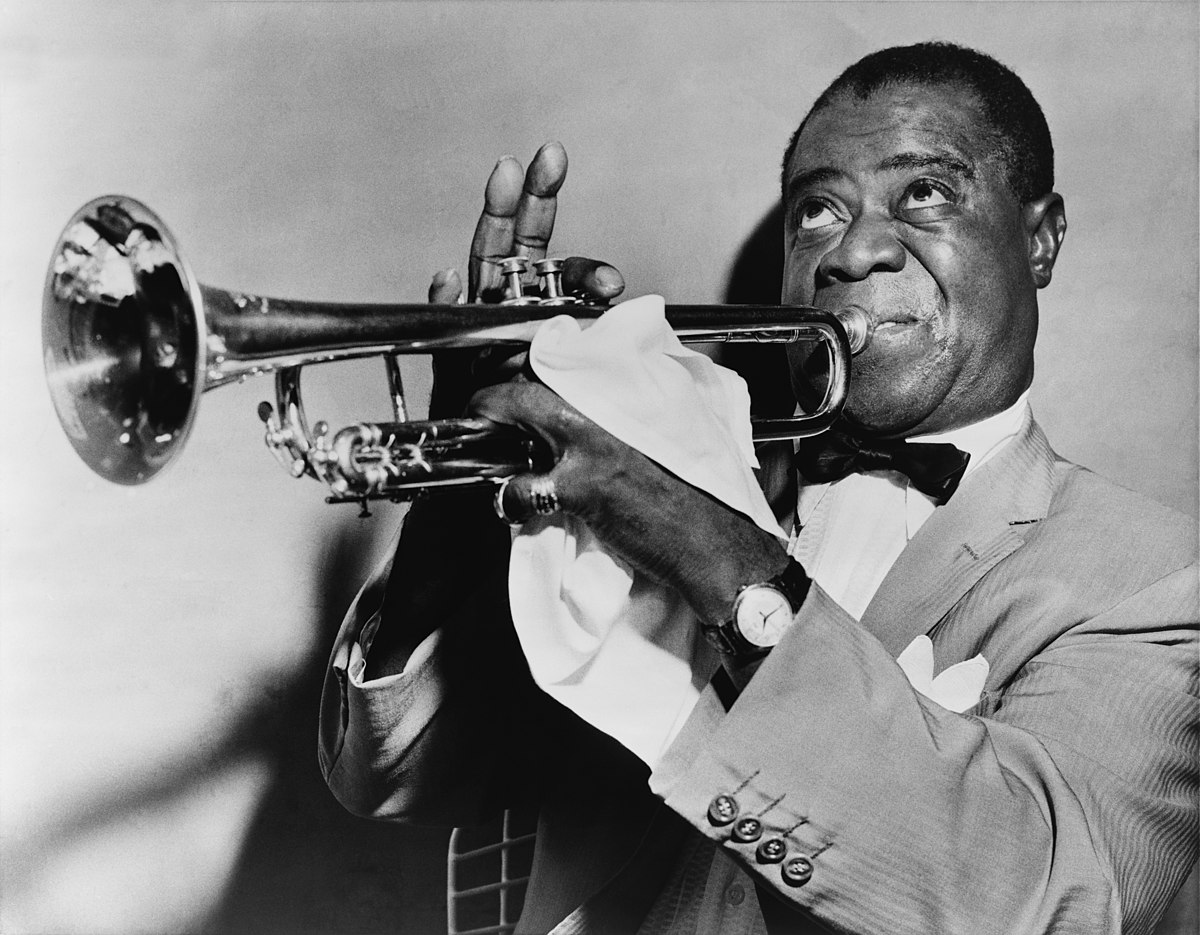

Image result for louis armstrong

June 4, 1919, Congress passed a law that would concern every American citizen. The 18th amendment banned the sale, manufacture, and the transportation of alcoholic beverages. However, this amendment did not prevent the people from indulging in alcohol. Born from the 18th amendment, speakeasies were secret bars and clubs offered the people an illegal sanctuary from the law prohibiting alcohol. Bootleggers were also a result of prohibition. "All I do is satisfy the public's demands" this quote is from one of the most famous bootleggers of the 20's, his name was Al Capone. He was an infamous mobster who made millions of money from bootlegging alcohol.

Image result for al capone

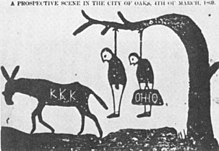
From the time of 1880 to 1910, thousands of black people had been moving North. This movement was known as "The Great Migration". Blacks in America in the South and were seeking escape from racism and employment in the North. To their dismay, they were met with more violence as veterans were returning to find their jobs filled. This led to violence and riots creating racial tension between the Black and White community. Amidst the riots, the KKK preached "the purification of America" The KKK was seen strongest in Midwestern cities like Detroit and Chicago. The KKK membership reached a peak during the 1920's.

Image result for KKK

The 1920's was an age of innovation. People were changing, parties were regular, dancing was scandalous, music was discovered, and art emerged. Improvements in technology and urbanization created a higher standard living for most Americans. The Roaring 20's will be remembered as an era reinvention. Famous for jazz, prohibition, and racial tension.

Hatmaker, Alicia. "Ending the War and Lasting Impacts." Athens Drive High
     School. Lecture.
"The Jazz Era." The Roaring Twenties, sites.google.com/a/uconn.edu/
     the-roaring-20s/evolving-music.
Hatmaker, Alicia. "The Roaring 20's." Athens Drive High
     School. Lecture.

Thursday, 28 September 2017

Monopolies

A monopoly is defined as "the exclusive possession or control of the supply or trade in a commodity or service."John D. Rockefeller, Cornelius Vanderbilt, Andrew Carnegie and J.P Morgan formed "The Big Four". These men became famous for their ruthless business tactics that drove competitors out of business for theirs to gain more attraction. 

"If you want to succeed you should strike out on new paths, rather than travel the worn paths of accepted success." This quote by John D. Rockefeller defines his views as a leader in the industrial expansion in America. John D. Rockefeller was a strategic businessman who saw opportunity in the oil industry sometime in the 1860's. Rockefeller controlled around 90 percent of the oil industry in America during the 1880's. The Standard Oil Company used horizontal integration to buy similar companies to reduce competition, resulting in the unity of many oil refineries in Cleveland, Ohio. Rockefeller also implicated trusts. Trusts are a group of people who ran separate companies as part of one larger corporation. This tactic was designed to set low prices to drive competitors out of business, then raise the prices to turn a high yielding profit. Resulting in low wages for workers and high income to men in charge like Rockefeller.  
Image result for john d rockefeller

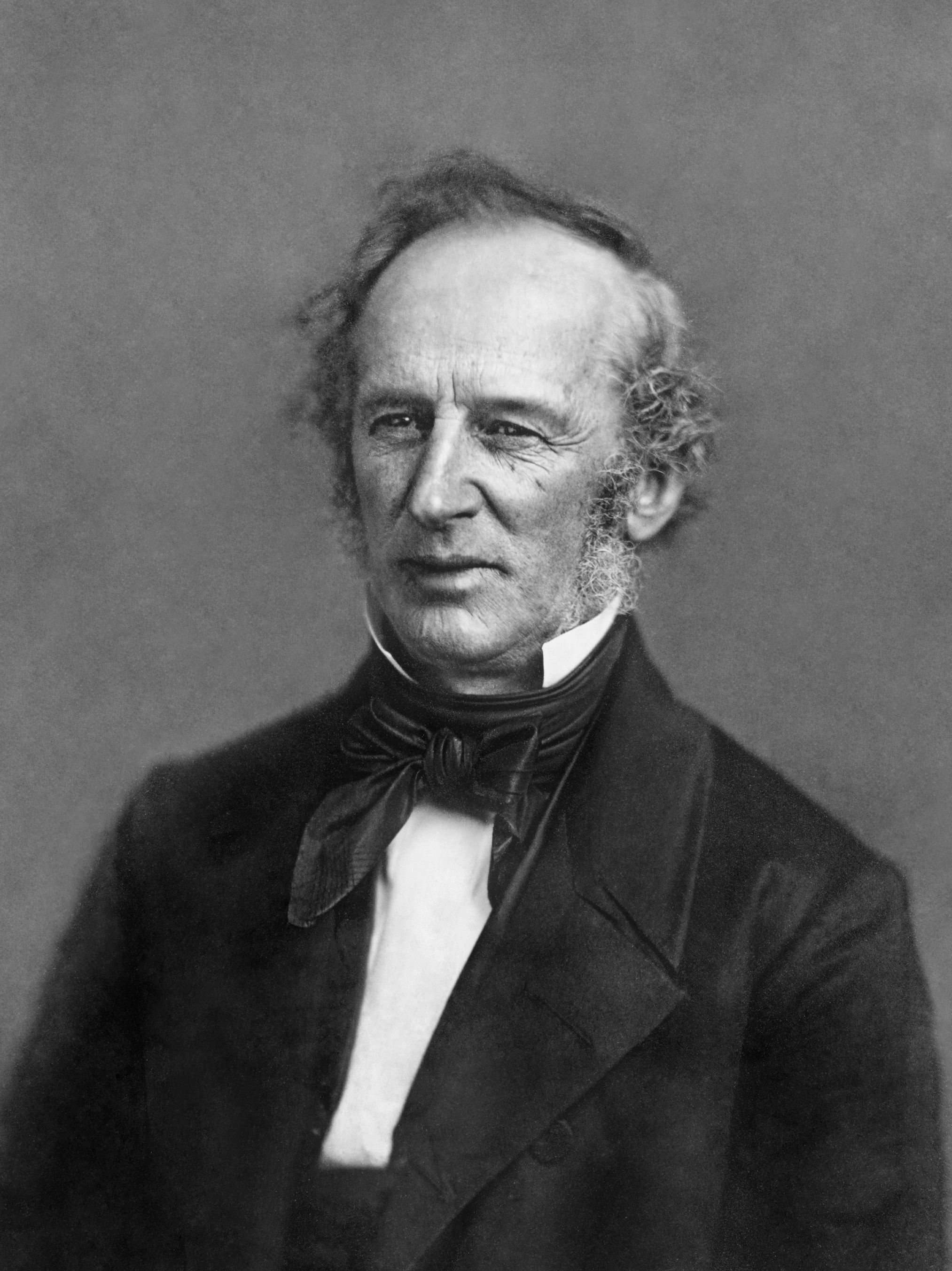
Similar to Rockefeller Cornelius Vanderbilt found his success during the industrial expansion. Cornelius Vanderbilt gained control over many railway lines operating between Chicago and New York. Vanderbilt gained control by constantly lowering the price of tickets to drive other railway owners out of business. After running out his competitors he would proceed to buy their companies and materials. Once he owned nearly all the railway companies, the towns, the tracks, he would higher the price to buy a ticket. 
Image result for cornelius vanderbilt

Unlike the two previous "Captains of Industry", Andrew Carnegie was born into a humble family in Dunfermline, Scotland. He immigrated to America as a young boy looking to enhance his education. Carnegie spent much of his childhood working as a telegraph messenger. This job taught him the railway industry and smart business, along with the importance of investments. Carnegie goes on to form the U.S. Steele Company. He invested in the Bessemer process that could mass produce steel inexpensively. Carnegie used both horizontal and vertical integration to buy out any competitors and become the leading supplier of steel. Towards the end of Carnegie's life, he wanted to give back to the people so he wrote "The Gospel of Wealth".  In his book, he claimed that the duty of the rich is to distribute their wealth to others. He lived up to his words and gave 90 percent of his wealth with the intention to set up schools, libraries, art centers, hospitals, and the list goes on. 
Image result for andrew carnegie
Another member of "The Big Four" was J.P Morgan. J.P. Morgan was one of the powerful bankers of his era. He founded his success from large corporations that needed money to finance their growth. He did this through holding companies. Meaning he would buy the stock of other businesses to absorb their profits. Although his tactics were not "fair" they surely worked in making J.P Morgan one of the most prosperous bankers in America. 

Image result for jp morgan
Industrialists like Rockefeller, Vanderbilt, Carnegie, and Morgan changed the way businesses were organized. Businesses began hiring professional managers to oversee employees, improve efficiency, and manage finances. Corporations became the more common business structure, they began using trusts to manage the company and holding companies to manage other subsidiary companies and used mergers to increase profit.

Works Cited:
https://www.brainyquote.com/lists/authors/top_10_john_d_rockefeller_quotes
http://www.dictionary.com/browse/monopoly
http://www.history.com/topics/cornelius-vanderbilt
https://www.biography.com/people/andrew-carnegie-9238756
http://www.history.com/topics/john-pierpont-morgan

Sunday, 10 September 2017

How the Past has Affected the Present

The past does affect the present. Not only does the past teach the following generations, but it also sets the building blocks for technology, clothing, and architecture. All of these new innovations and advancements can be traced back through time.

For example, technology has existed for thousands of years, from the invention of the microscope to the invention of computers and cell phones it has been constantly evolving. For example, in 1879 the light bulb was invented. Had the light bulb not been invented headlights or street lights would not come to be. These two innovations are derived from the light bulb and are important to the safety and visibility of people now. This minor advancement shaped the lives of today's people.


The past has also molded the everyday lives of men and women through apparel. The year 1790 high waisted dresses become fashionable among women. This high waisted garment transformed into high waisted shorts, pants, and even skirts worn by women today. In 1919 the t-shirt was first introduced by the US navy to be worn as an undershirt. We now see the t-shirt worn by both genders on a daily basis. Much of the trends worn today can also be seen in the past.

Finally, the past has also transformed architecture and engineering. The 5th century Greeks were the first to invent the columns. Today we see the use of columns in places like parking decks, bridges, and even homes. Another revolutionizing innovation was the invention of the aqueduct. Aqueducts were invented to provide water to the people residing in that town or village. Aqueducts were also used in New York City, NY, 1842 to provide clean water to a growing population. Lastly, the invention of bathtubs can be attributed to the ancient Greeks. The Greeks were the first to direct the clean water from the aqueduct into man made pools used for bathing. This innovation certainly reconstructed how people bathed and without this modification, the modern bathtub would not exist.


As shown in the paragraphs above, the past does affect the present. The past has influenced modern technology, clothing, and architecture. Without the knowledge and achievements of past generations and people, modern advancements would never occur.  

Works cited:
http://www.localhistories.org/clothestime.html
https://www.thoughtco.com/architecture-timeline-historic-periods-styles-175996
http://www.datesandevents.org/events-timelines/12-technology-timeline.htm